Roaming Thru Rome

[This is the post that started it all…my very first trip overseas!  I sent this email to friends & family in June 2007.  It still cracks me up.]

~~~~~~~~~~~~~~~~~~~~~~~~~~~~~~~~~~~~~~~~~~~~~~~~~~~~~~~~~~~~~~~~~~~~~~~~~~~~~~~~~~

Hello, everybody!  I have been in Rome less than 48 hours and so far, my trip has been like a Greek tragedy.

Act 1 “Getting to Rome”

I was booked on an US Air flight (from now on, I’ll be referring to them as Beelzebub Airlines, i.e. the Devil, or just B for short because it’s easier).  Anyway, I had a B flight from Atlanta to Philly with just 1 hour for a layover before my connecting flight to Rome.  Now, I knew it would be cutting it close should there be a delay but there wasn’t anything I could do.  So, the flight from Atlanta gets delayed because there was too much “air traffic” in Philly.  How long is the delay?  One hour.  Yes, I said 1 hour.  The exact time I had between connections.  So, the B pilot (I’m just gonna call him “Cooter”) tells us that B always pads the flight duration times so we will arrive at 5:15pm.  I had a 6:05pm connecting flight.  As Cooter is flying the plane he starts talking about altitude and the sunshine and other things I don’t really care about.  I care about him increasing the speed on that jet so I could catch my flight.  A 7-year-old girl looks at her watch (apparently the watch that Cooter doesn’t own) and announces that it is 5:25pm and we haven’t even begun to descend from the sky.  I ask the flight attendant about options to hold my connecting flight by a few minutes.  Of course, they can’t promise that but did say they would have an electric cart waiting to drive me over to the next concourse.

We finally land and I get off the plane around 5:45pm.  Was there an electric cart waiting?  I think you know the answer.  My Mom calls to let me know that they’ve already boarded the flight and I need to get there now because they are about to close the door.  So, I’m running like OJ thru the airport (without the knife or a Bronco) because there was no electric cart.  I get to the gate and the less-than-friendly gate agent says, “We gave your seat away.”  I responded with “Oh, so I’m flying first class now, right?”  She said, “As of right now, you don’t even have a seat on the plane.”  I just looked at her and thought to myself “Hmm, I’m gonna be on this flight if I have to sit with the pilot” and then wondered what kind of in-flight service he received because I’m sure he’s eating better than coach.  She eventually finds a seat for me and I am able to board.

Act II “Arrival to Rome”

I arrive in Rome and guess who doesn’t have their bags?  If you guessed me, then you are correct.  I don’t have one article of clothing because I packed everything except for toiletries.  I report my luggage as lost and started with my day.  Rome is BEAUTIFUL.  The experience of being here is hard to explain.  However, I will share with you a few tidbits on the craziness that’s happened to me.

Since I don’t have any clothes, I had to go shopping.  Now, something I didn’t know about Rome is that they apparently hate fat people.  And, by fat people, that would be anybody that wears a U.S. size 6 and above.  I go to a store and pull a couple of dresses off the rack to try on.  I select a medium and a large (thinking that they might run a little small).  A saleswoman (I’m calling her “Nunya” because she was all in my business without needing to be) walks up and looks over my shoulder at the sizes I picked up and says loudly (because apparently fat people are deaf too) “Jeeww need an EXTRA EXTRA LARGE”.  I looked around thinking that maybe she was talking to someone else but she was all up in my face.  So, I was like, “Um, I don’t wear that large of a size.  This will be fine.” and go about my business of browsing the new “Crack/Smack” summer collection (because wasn’t nobody gonna fit them clothes unless they hit the pipe).  So, Nunya disappears to what I thought was to mind her business.  I was wrong.  She comes out of the back room with an XXL size dress (I guess they leave the fat clothes in a special “Baby Got Back Room” or something) and then announces to the entire store “NOOO, JEEWWW NEED DIS EXTRA EXTRA LARGE.  IT STRETCHES SO IT HELPS YO HIPS!”  Um, what?  My mind is screaming, “I know she ain’t talking to me.”  I refuse to buy a size that I spent a year of hard dieting to leave behind.  I wish I would by an XXL!  I wear small and medium.  I don’t care if America is lying to me about my size.  Lie to me, America.  I don’t want to know the truth.  Clearly, I can’t handle the truth.  So, I take the Jabba-the-Hut-sized dress and decided to try it on to prove to her that it was too big.  Game on, sister!  Well, to my surprise…that sucker barely fit.  So, um…game off.  My face was TIGHT!  I was like, “oh hecks naw.”  When did I become an XXL?   Oh my God.  I’m the light-skinned Precious!  As I’m having my meltdown, Nunya says, “See, the fab-er-ic stret-chas fo jeww.”  I just had to leave the store because my nerves were shot.

As I left the store and fumed all the way up the street, I started wishing I had some gelato to ease the pain of being called fat.  Eventually, I find another store, and pick out a couple of outfits.  But since the clothes are sized different, I wasn’t sure which size was appropriate.  The sales guy (let’s call him “Antonio”) told me that I wear a 2.  I was like “Is that a fat girl size?  Because I ain’t buying a fat girl size.”  At this point, my Mom is just looking away and laughing because other people in the store are looking at me like I’m crazy.  Whatever.  I was serious.  NO FAT GIRL CLOTHES!  My experience with Nunya had scarred me and I needed someone to talk me down and it was Antonio’s job to do it.  He turned on the Italian charm and I finally found an outfit that fit then paid an astronomical amount because everything is expensive.  If any of you are looking to do an outreach ministry, consider donating to me.  Thanks!

Act III “Fat Brownie does Rome”

I thought my bags would arrive the next day…they didn’t.  Thanks, Beelzebub Airlines!  So, I had to go thru the shopping process all over again but decided to check out a different area.  During my second sojourn into the trials and tribulations of being a big girl, I noticed something else…they don’t sell underwear.  Well, they sell it sparingly and for a small fortune…like it is illegal or something.  I asked at least 3 or 4 women where I could find underwear.  At one store (I’ll call it “Skelewear” because you had to be a skeleton to fit the clothes), nobody spoke English.  I know very limited Italian and used it up ordering a sandwich (big girls gotta eat).  So, the lady says “yesa, I speaka a leetle englese.”  I ask if she knew of anyplace that sold underwear.  Her response?  “Yes.  No.  No.  Grazie” and she walks away.  Yes, no, no, grazie?  The hell?  After walking around to a few stores, I finally found a pair of underwear.  One pair costs $25 euro (since it wasn’t Spanx and that is apparently what I need to wear some clothes around here, I just passed)!  I thought about finding Fabrizio on the corner and asking him if he could get me some Hanes off the black market for $5 euro.  Somebody has to have the hook-up around here.  I tried on more clothes, of which nothing fit.  By now, my nerves are shot, I’m joining Weight Watchers online and looking for an Italian Lane Bryant.  I end up borrowing clothes from my mother and other people on the tour.  Because I’m too fat for Rome and have no luggage.  How about that?
Act IV “My Daddy”

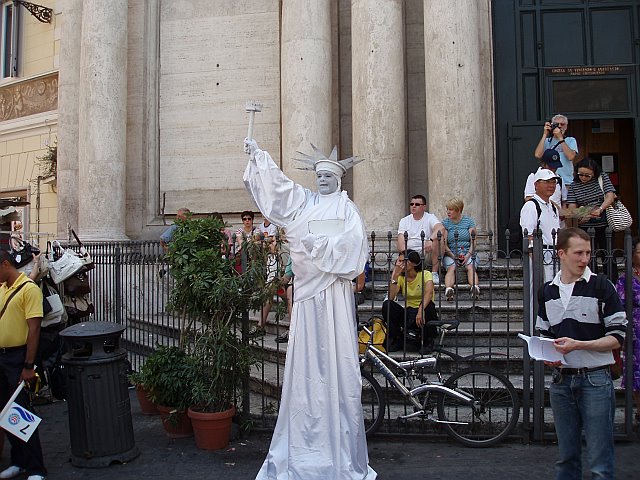
We went to see the Trevi Fountain and there was a guy that was dressed up kind of like the Statue of Liberty — faced painted gray with a gray robe holding a torch.  I then realized it was an actual person…not a statue.  So, I say discreetly to my father, “Dad, watch your step because you are about to back up on that guy.”  He looks around and says loudly to the entire group of 37 people “HEY!!!  THAT’S AN ACTUAL GUY.  I THOUGHT IT WAS A STATUE!  BRENDA, GET ME THE CAMERA SO I CAN TAKE A PICTURE.”  All up in the man’s face.  I was like, “What didn’t you understand about me being discreet?”

All in all, Italy really has been an amazing experience — 10,000 Miles by Air, 700 Miles by Bus, and 100 Miles by Foot (well, that may be a slight exaggeration).  Seeing the ruins up close is something I really can’t describe.

Here are my favorites:

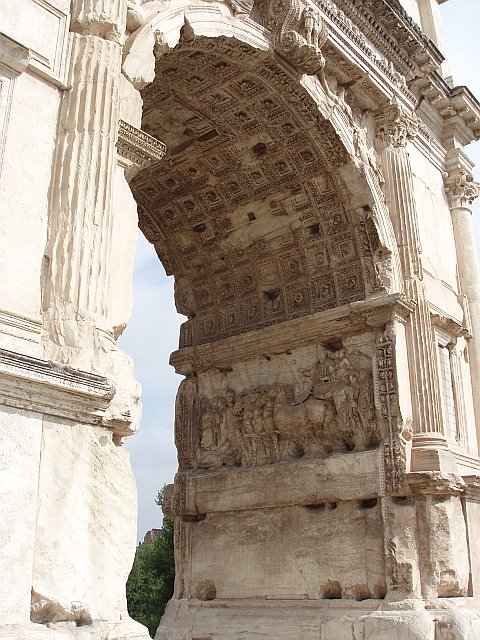
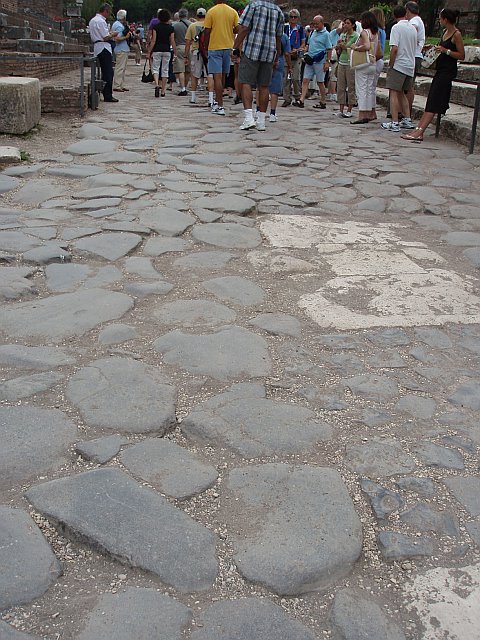
The Roman Forum — All Roads Lead to Rome
    

The Fonatana di Trevi was created by Nicola Salvi in 1762 and is Rome’s largest and most famous fountain.  You can see the central figure is Neptune and he is flanked by two Tritons (one trying to master an unruly seahorse and the other leading a quieter beast).  This is supposed to symbolize the contrasting moods of the sea.  It’s estimated that each day 22 million gallons of water flow thru the fountain.  This is the original site of the Aqua Virgo aqueduct built by Agrippa in 19 BC to channel water to Rome’s new bath complexes.  It may have been named for a girl named, Trivia, who is said to have first shown the spring to thirsty Roman soldiers.  Legend has it that if you toss a coin into the fountain, you are guaranteed to return to Rome.  I’ve been back to Rome twice since that time.


The Spanish Steps (aka Piazza di Spagna) is the most famous square in Rome and takes its name from the Palazzo di Spagna, built in the 17th century to house the Spanish embassy to the Holy See.

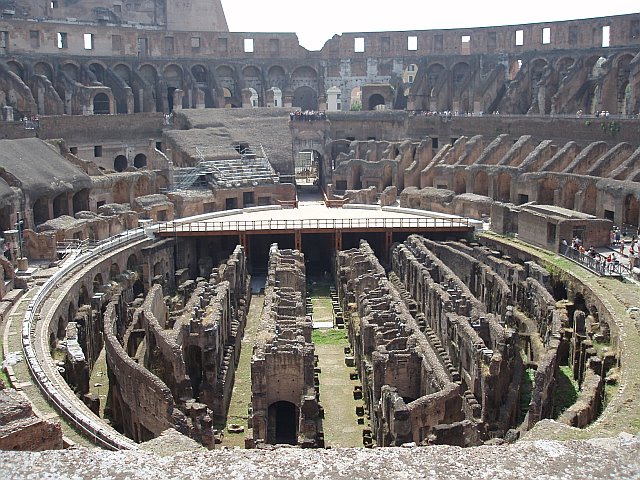
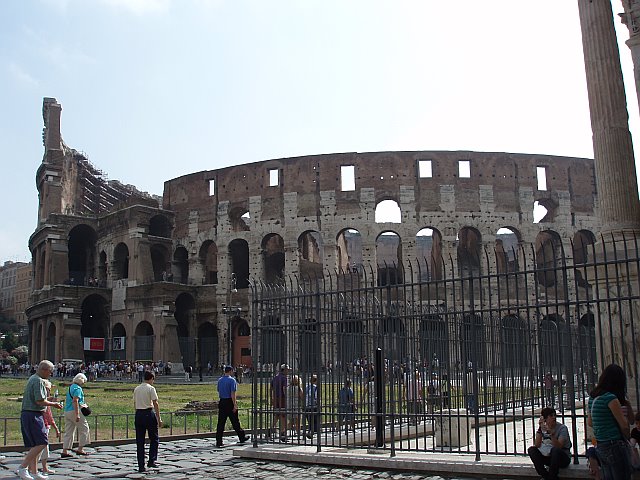
The Colosseum is known as Rome’s greatest amphitheater.  It was commissioned by Emperor Vespasian in AD 72.  In this theater, up to 55,000 spectators could watch gladiators fight each other or wild animals.  During the inaugural games in AD 80, approximately 9,000 wild animals were killed.  Slaves could gain their freedom by fighting men or wild animals to the death.  I guess you fight for freedom or die trying.
  

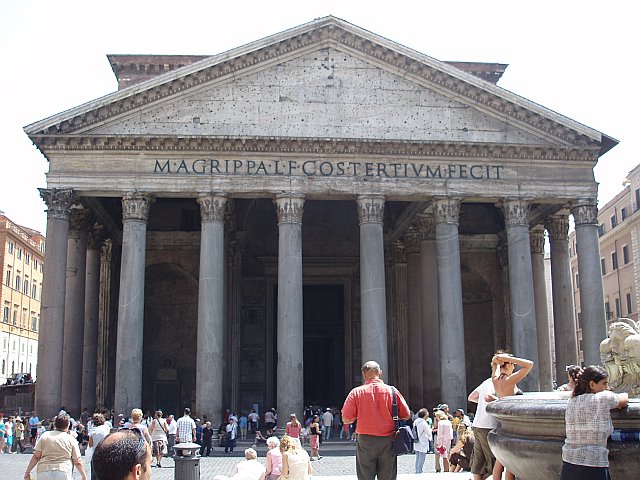
The Pantheon is also known as the Roman “temple of all the gods.  It’s the best preserved ancient building in Rome.  It was built (and possibly designed) by Emperor Hadrian in AD 118.  It’s interesting in that during the 7th century, permission was granted to turn the temple into a church when Christians claimed by be plagued by demons as they passed by the building.  Today, it’s lined with tombs and holds the bodies of Italian monarchs.
 

Other than the clothing situation, things have been wonderful.  The men are absolutely gorgeous and I’ve had several people say that I look like I’m 18.  Which is great since I’m just a couple of years older than that 🙂  Please pray for me that I receive my luggage soon.  Otherwise, no telling what you might see on CNN.  I might be in the studio with Sir Mix-a-lot working on the Italian version of “Baby Got Back”!  Ha!  Until then…ciao!

Smartphone Apps = Smart Travel

Smartphone apps are a great way to plan & enhance your travel. Below is a list of my favorite iPhone apps that I use while travelling.  The best part?  Most of these apps are free unless I’ve specified a cost.

1.  Trip Planning

  • Expedia‘s Trip Assist — Great way to book or manage trips via Expedia.
  • Trip Advisor — I use Trip Advisor before booking any hotel because I find the reviews invaluable.  Plus, users can post pictures of the hotels which gives you an honest look at the property instead of the “dressed up” photos from 15 years ago.
  • Airbnb — This is the coolest app.  It’s a booking tool that features unique places to rent.  You can rent a luxury villa, an igloo or a house shaped like a boot!

  • Jetsetter —  It’s invitation-only & features flash travel sales to exotic destinations all over the world.  This app features every kind of hotel you can think of – luxury properties, trendy hang-outs, or eco-conscious resorts – for discounts as high as 50% off!  Love this app!!
  • TripIt — Great app for managing your travel itinerary.

2.  Logistics (Air, Train, etc)

  • FlyDelta
  • TripTracker — Keeps track of all your travel plans across different airlines.  Will notify you of any changes to your reservations.
  • GateGuru — Great app for identifying products & services in each terminal at the airport.
  • Rail Europe — This is a must-have app for European train travel.  You can easily check arrival/departure times and book tickets.
  • Amtrak
  • AllSubway HD — this is a WONDERFUL app!  It features maps for 128 different cities around the world (i.e. Atlanta, Amsterdam, Chicago, Sydney, London, Paris, Cairo, Buenos Aires, etc.)
  • Taxi Magic — Electronic taxi booking service.  Great for finding out what rates should be.

3.  Tours

  • Viator — I’ve been using Viator for 2 years and love it!  The app is super easy to use and great for showing you last-minute deals on tours.
  • Rick Steves‘ Audio Europe – Free audio tours you can download from iTunes.  Tour cover Paris (i.e. the Louvre), Rome, Florence, etc.  It’s a great app if you don’t want to pay for an audio guide.

4.  Food & Drinks

  • Starbucks — In case you need your caffeine fix on the go.
  • Zagat — Provides ratings and reviews for restaurants worldwide ($9.99)
  • UrbanSpoon — You can find local restaurants by shaking your device and watching nearby restaurants slide up and down your screen like a slot machine.  This app covers the U.S. Canada, UK and Australia.
  • Foodspotting — Shows nearby restaurants and allows users to recommend specific dishes.

5.  General

  • Cultures — This is a great app to educate yourself on the local customs for each country you visit.
  • Currency — I use this app ALL THE TIME!  I absolutely love it.  Enter in the amount in a particular currency and it will show you what it costs in U.S. dollars and vice versa.
  • Google Translate — Great app for simple translations.
  • Free Wi-Fi Finder

6.  Country-specific apps

  • London = London Tube Map; JourneyPro
  • Paris = ParisMetro

Here are a few resources that can help you find travel apps for your device type.

AOLs 11 Best Travel Apps

10 Must-Have Travel Apps for your iOS Phone

Forbes 10 Best Travel Apps

Best iPhone Tour Apps

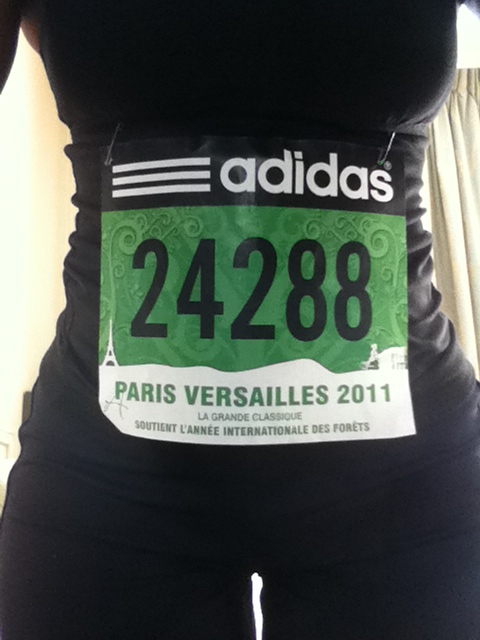
Race Series: How I Survived the Paris-Versailles 16K Race!

Running an international race was on my bucket list this year so I jumped at the chance of participating in the Paris-Versailles 16K (which is 10 miles)!  I had run a half marathon earlier this year so I thought it would be a piece of cake.  Wrong.  I was required to have my doctor sign a medical waiver (clue #1).  Since I love Paris and Versailles, I thought this would be a great idea and it would give me a chance to see some beautiful scenery.  I had read the info on the race website and a question was asked about the terrain.  The question was “I’ve never ran the Paris-Versailles, is the race difficult?”  The reply, “The race, in spite of the reputation of the “Côte des gardes”, is still easier than a half marathon. Be careful on the last climb to Viroflay (before the feeding station of km 13) who is redoubtable, as well as the slight incline of the Avenue de Paris in Versailles, which can seem endless.”  (clue #2)  That’s it.  Keep that response in mind for later, k?

I get up, head to Starbucks for yogurt and then take the train to the Eiffel Tower where the race is to start.  Um, why were there several funky folks on the train?  Dude, you haven’t even ran the race yet?  You want to be smelling like booty funk when you wake up?  Hose yourself off and get some deodorant.  The thought going thru my mind was, “what the hell is it going to smell like after the race?” 

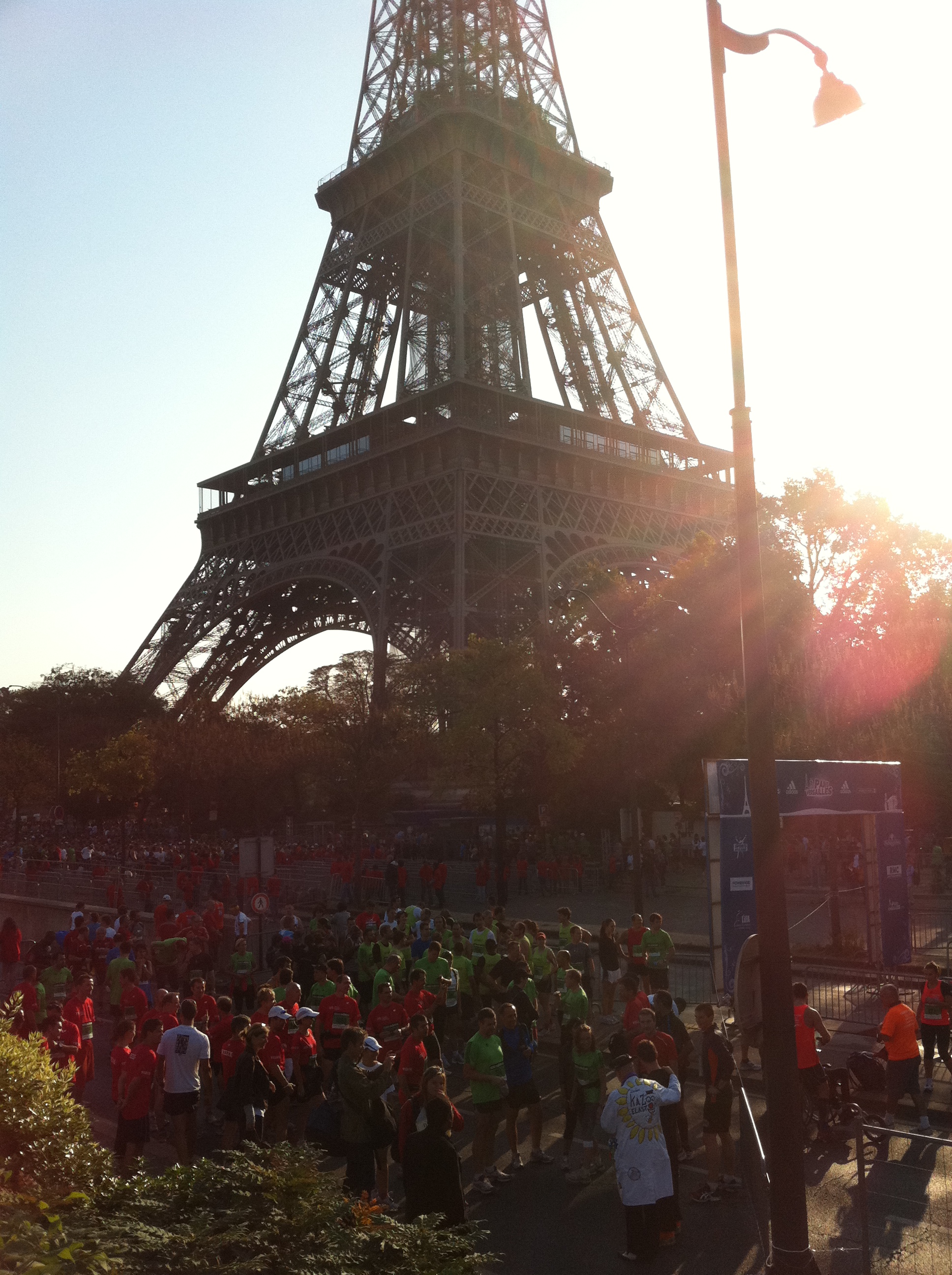
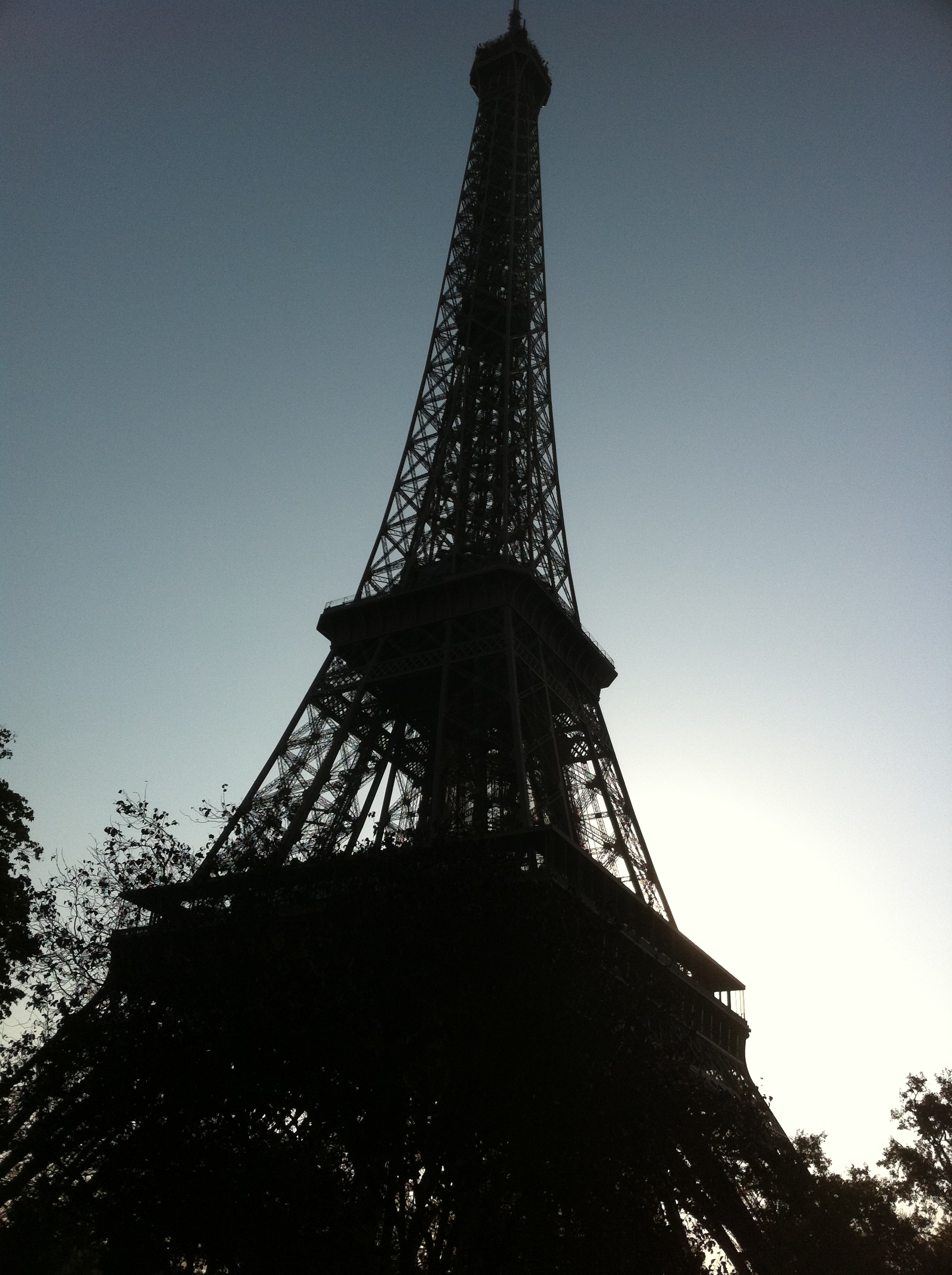
So, we arrive at the Eiffel Tower and it is packed.  The race had sold out about a month earlier.
    

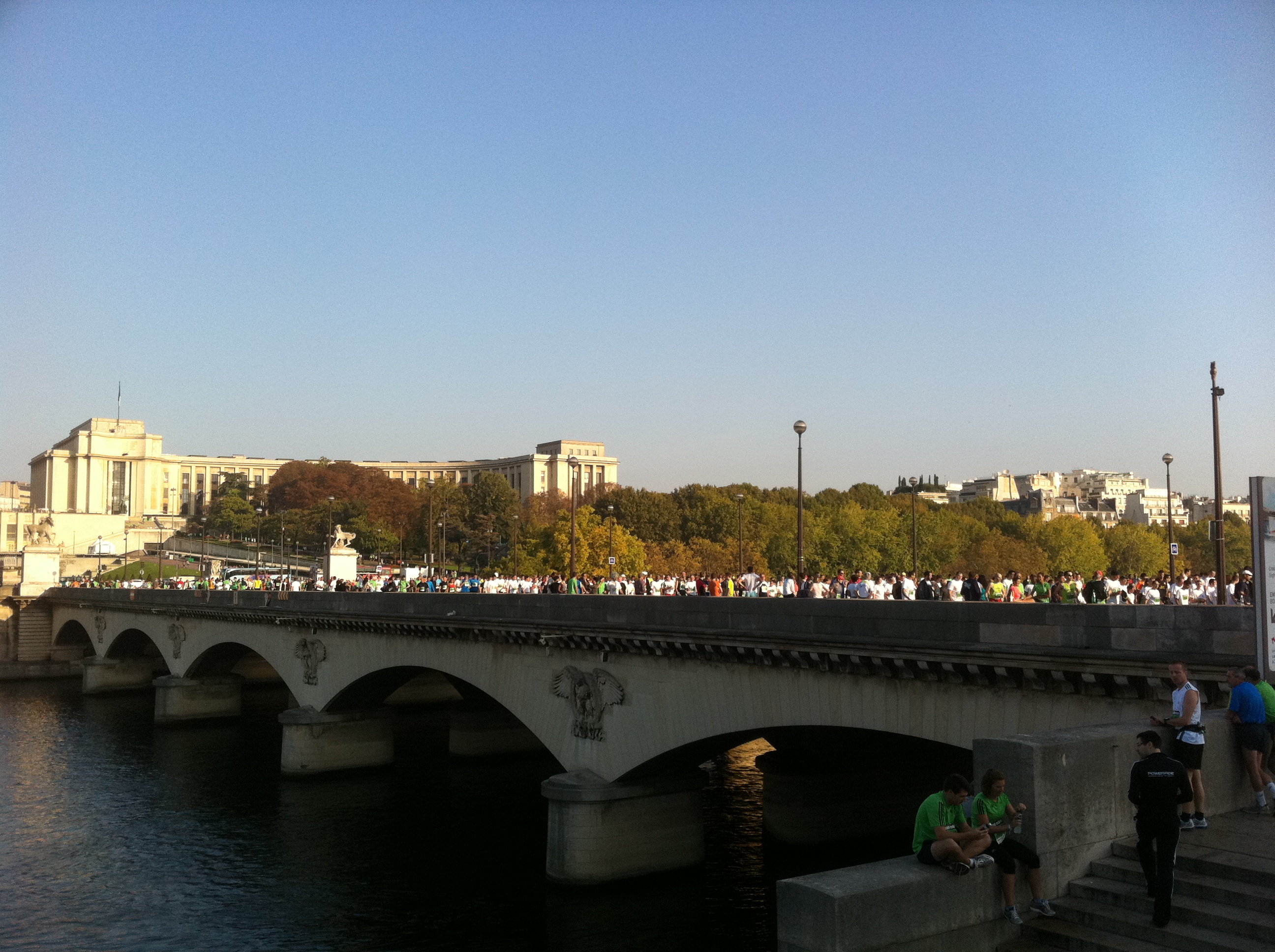
View of people walking over the Seine towards the starting line.

I met up with a couple of French colleagues in the starting area (which is packed).  Then, as we are lining up, my colleague says, “Hey, be careful out there because people have died running this race.”  Wait, WHAT?  People have died?  Why wasn’t that in the literature???  He tells me that people always overdo it because they aren’t ready for the huge hill between kilometers 6 and 8.  They don’t pace themselves appropriately.  Then, he says that he saw 2 people die a couple of years ago.  WHAT THE HELL?  WHY AM I JUST NOW HEARING ABOUT THIS MESS?  I AM NOT READY TO DIE.  I HAVEN’T SAID GOOD-BYE!  So, I did the best I could…sent a message on Facebook telling everybody that it’s been a good life & requested they keep me lifted in up prayer.  Ha!

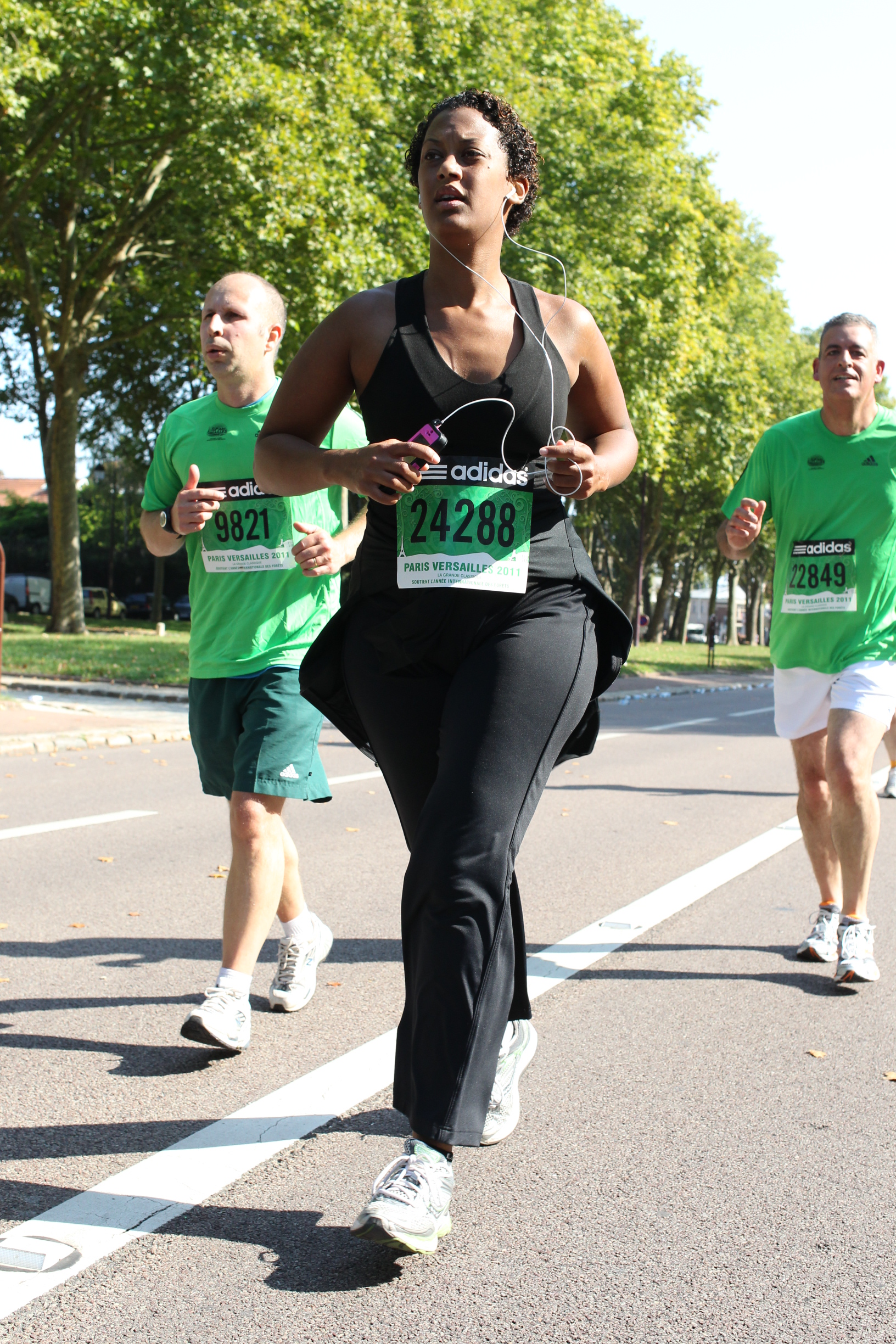
The race has a rolling start but unlike half & full marathons, you aren’t grouped by pace.  They just let a certain amount of people start running every 2 minutes.  Finally, our group is released to start the race.  A couple of things I notice from the start.  First, there is no concept of personal space.  People just run all up on you so you are constantly covered in other people’s sweat.  It’s gross.  And you cannot avoid it.  Second, Port-O-Potties are a suggestion, not a requirement.  While they have some at the hydration stations, most people just stopped running and urinated on the side of the road.  Men AND WOMEN.  I don’t need to see Jean-Claude whip out his junk and I certainly don’t need to see Chanel pull her pants down and squat.  Really?  On the side of the road???  I can’t take it.

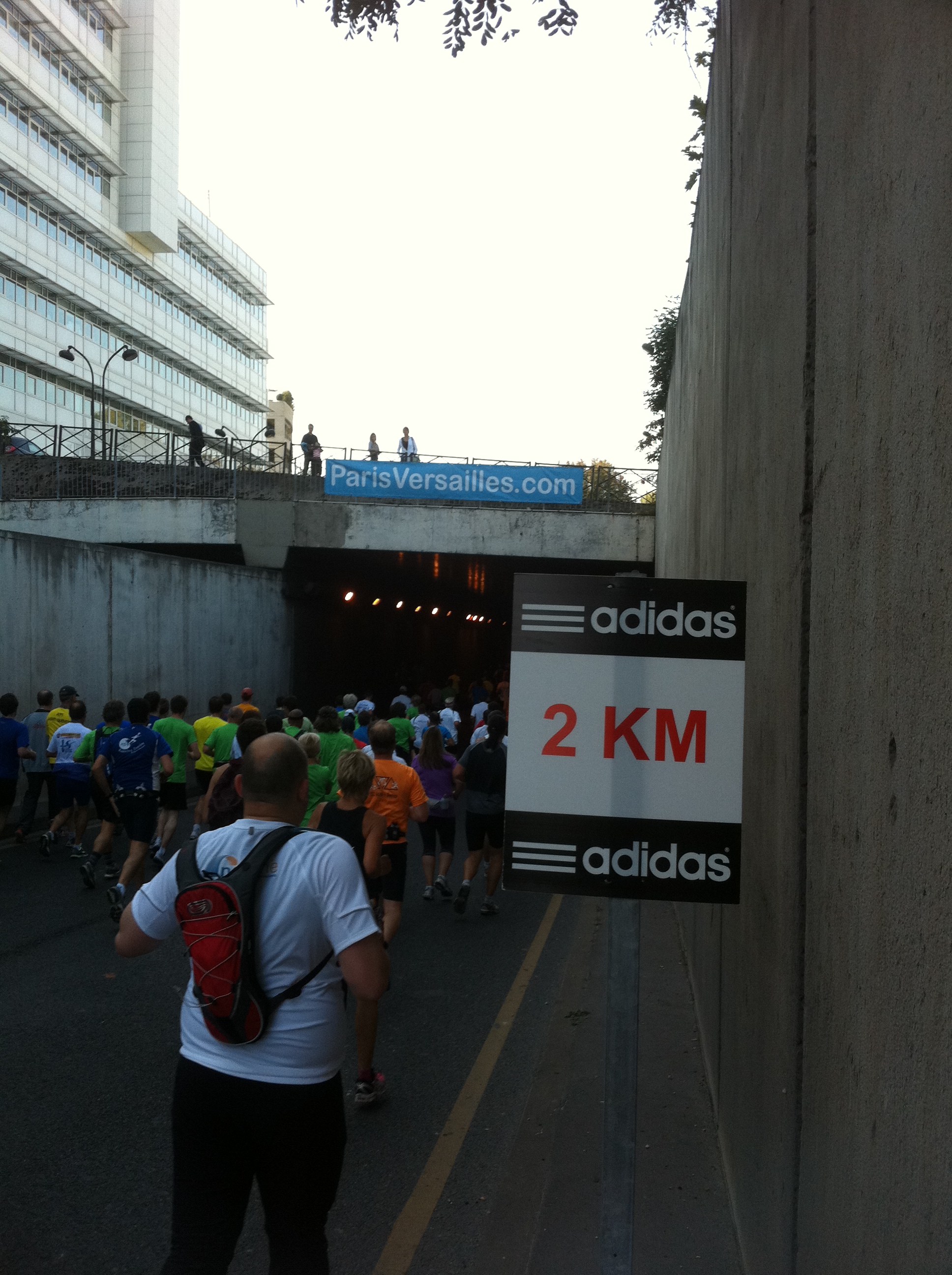
Once I’m over that, I’m able to continue focusing on my run.  Then, I see some guys running in chicken costumes.  In the heat…for 10 miles.  I’m sure that seemed like a neat concept in theory.  By the 3km marker, the chicken head had come off and was tossed to the side…by the 6km marker, the entire suit was tossed.


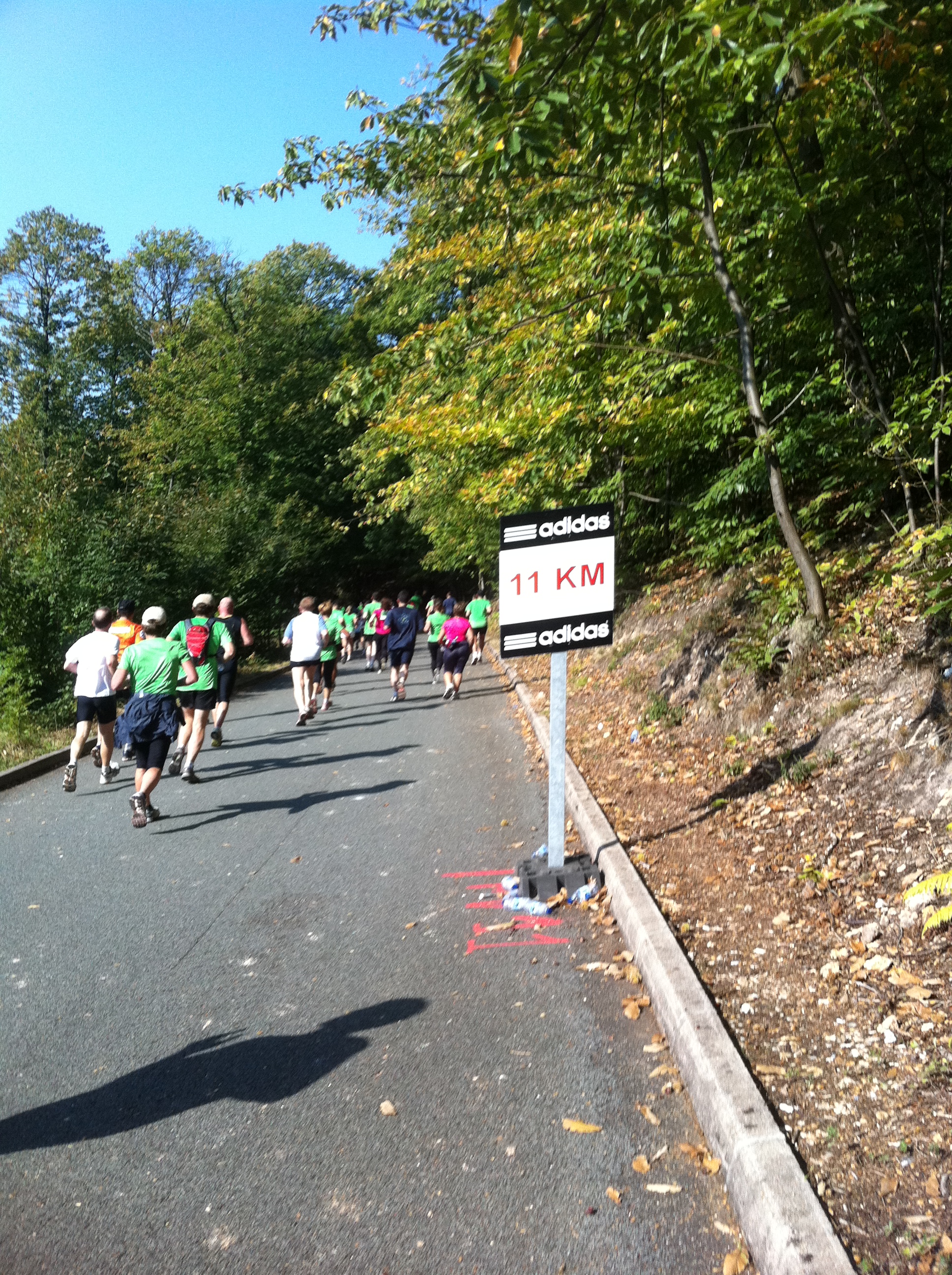
I’m just running along and then I come to the 6km marker and see what I’m gonna call the “Hill to Jesus”.  It went straight up.  Seriously?  What the hell?  I just started looking around for a train or bus stop because I just knew that I the hill would kill me and I would have to ask Jesus to help me out.  As I start my Jesus quest, I’m thinking that I have 20 Euro and could either find a taxi or bribe a kid to let me hop on his scooter.  The 2 km Jesus run seemed like it was 26 miles.  I honestly didn’t think I would make it.  I cursed myself out the entire time I was running (while I listened to Marvin Sapp’s “Never Would of Made it” to give me some encouragement.  Ha!).  I finally made it, gave thanks to Jesus and prayed that it was all downhill after that.  It wasn’t.  However, 11-13km was pretty good.  While I survived the hill, not everybody did.  I saw 3 people being rushed to the hospital via ambulance.  It’s weird passing ambulances that are stationed at every kilometer.  I also ran past several people at the medics tent getting oxygen and other medical care.  You know I was like, “uh…maybe I should just take a quick break and have them check my pressure?”  But, I kept it going.

Then there was another hill.  WTF?!?!?!?  I saw the medic scooter and thought, “I’m saved!”but it flew right on past to help out someone else.  They were probably faking.  I finally come to the last hydration station that has sugar cubes (that’s new for me), oranges, water and Powerade…and they are playing Michael Jackson’s “Thriller”…aw yeah!  That gets me hyped and I get a little burst of energy…

And, I finally cross the finish line 2 hours after I started the race.  One more goal achieved!!

France: Poppin’ Bottles Around the Champagne Region

Champagne.  That one beautiful, majestic word has the ability to conjure up anticipation & delight.  I absolutely LOVE champagne.  It’s my favorite alcoholic drink.  Mimosas are proper at all hours of the day.  It’s a crime to regulate it to brunch with milk, tea and coffee.  Seriously.  I know I sound like an alcoholic but…I can stop drinking it anytime I want.  I just choose not to.  It would be unfair to the makers of this beautiful, sexy beverage.

I was blessed to visit the bubbly cities of Reims & Epernay.  I only had 1 day (Saturday) since Sunday would be spent running the Paris-Versailles 16K road race.

Renee (my travel buddy, sister & overall fabulous superstar friend) joined me for the weekend!  Our day started early as we needed to take the train from Versailles (where we were staying) so I could pick up my race packet at the Paris Sports Complex.  We then took the TGV high-speed train from Gare Paris-Est to Reims.

Reims
Beautiful, beautiful Reims (pronounced “rance”, rhymes with France…I know, you don’t see the letter “n” either.  I can’t even begin to sound this stuff out.  I was saying “reems” forever.  I can’t tell you how many times I asked the sexy train ticket agent to pronounce that for me.  Ha!).  Reims’ is the administrative capital of the Champagne region.  It’s approximately 45 minutes from Paris if you take the TGV train.  This city is where 26 French kings & queens were crowned, where champagne first bubbled (mmm, mmm…I think I need to get a flute of the bubbly to type this post up…hold on…………………………………………………………………………………[looking for champagne]……………………………………………………………………………………………………..maybe I should drink a glass before writing?  Then have another glass while I continue to write?  You know it will go flat if I leave it out so I better just finish off the bottle.  Ooh, I have mimosa sorbet that I made last night.  I should get a bowl of that too.)… Sorry, I had to think thru this dilemma.  Where was I?  Oh yes, Reims.  This is also the city where the Germans officially surrendered in 1945 bringing WWII to an end.

The great thing about visiting Reims is that most of the sights are within a 15-minute walk from the Reims-Centre train station.  Otherwise, you can take the bus or tram (which are really easy to use) to your destination.  Now, my focus was to tour the champagne caves and do tastings ALL DAY LONG!  I am so serious about this.  Did I mention that I love champagne?  It’s like the Bert to my Ernie, y’all.

Despite the fact that we started our day at 8am, we were only able to catch the 11:30am train to Reims.  We arrive during lunch when all the champagne houses have closed down from 12-2pm.  So, we take this time to walk down the main boulevard and get some lunch.

This was a steak and cheese sandwich with fries loaded on top.  Awesome!  And, I’m pretty sure it’s only 8 points on Weight Watchers but I need to verify it…once I finish my mimosa.

Unsubstantiated Fun Fact…did you know that a glass of champagne every day increases the quality of your life?  You didn’t?  Well, now you do.  Don’t bother trying to fact check me.  It’s something I know in my soul.  I don’t need the FDA or Dr. Oz telling me lies trying to keep me away from my precious.

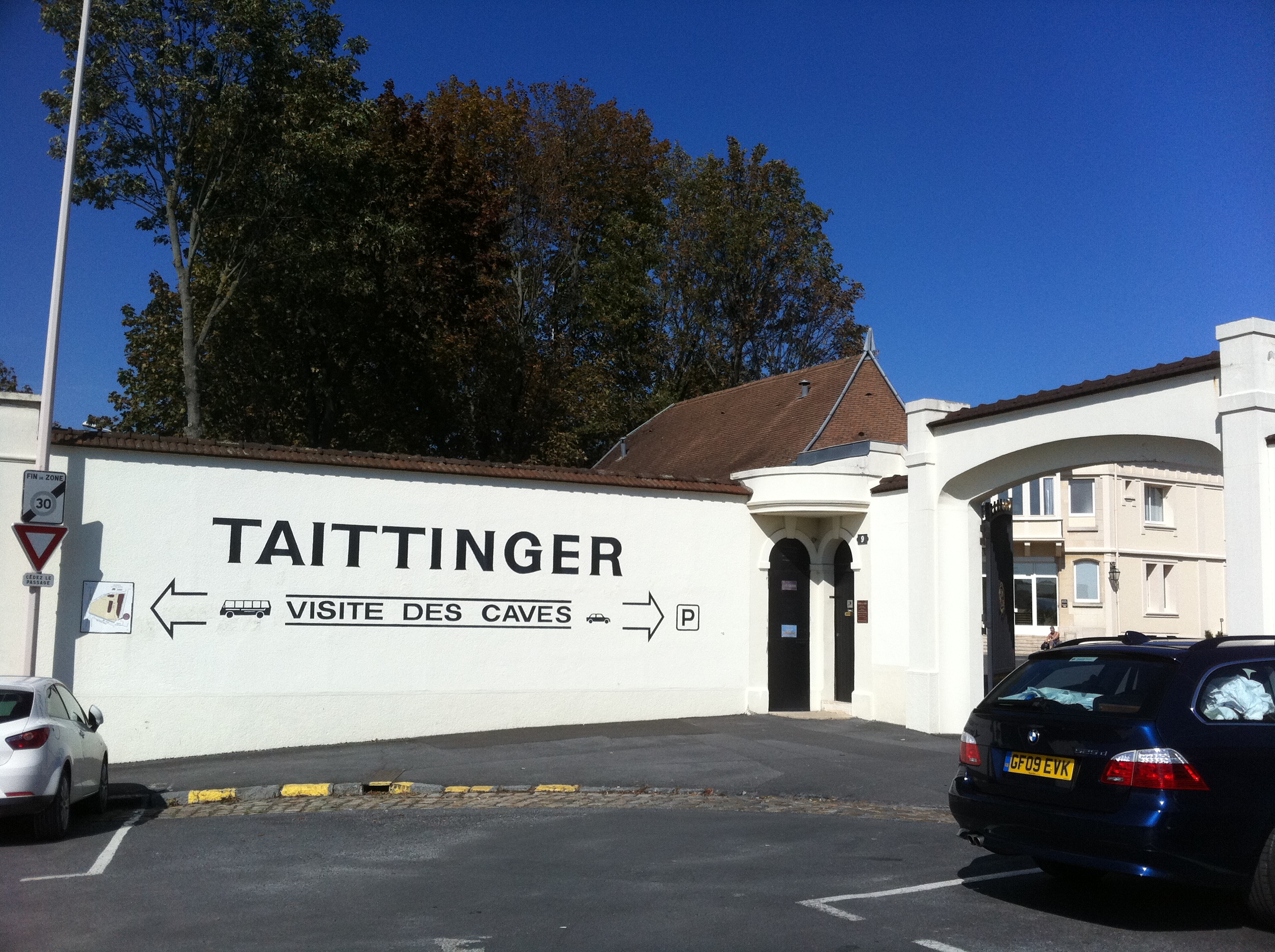
After we finish lunch, we start walking towards our first champagne house…Taittinger.  On the way, we pass a line for people to get in this round contraption so they can spin around like a ball for 2 minutes.

During our walk, I realize I need to use the bathroom.  We come across a McDonald’s so I say that I’m going to go in there.  Now, McD’s has never let me down.  I enter and realize it’s 2 stories with the bathroom being upstairs.  But, as I get to the stairs, I notice there is a man blocking my access and he’s wearing some sort of gold shield.  Apparently, they have Ronald McDonald police.  He asked if I purchased food because the bathrooms were for patrons only.  Um, why wasn’t he looking for the Hamburglar who, last I heard, was busy stealing kids Happy Meals?  Or did they crack that 45-year old case?  Seriously. 

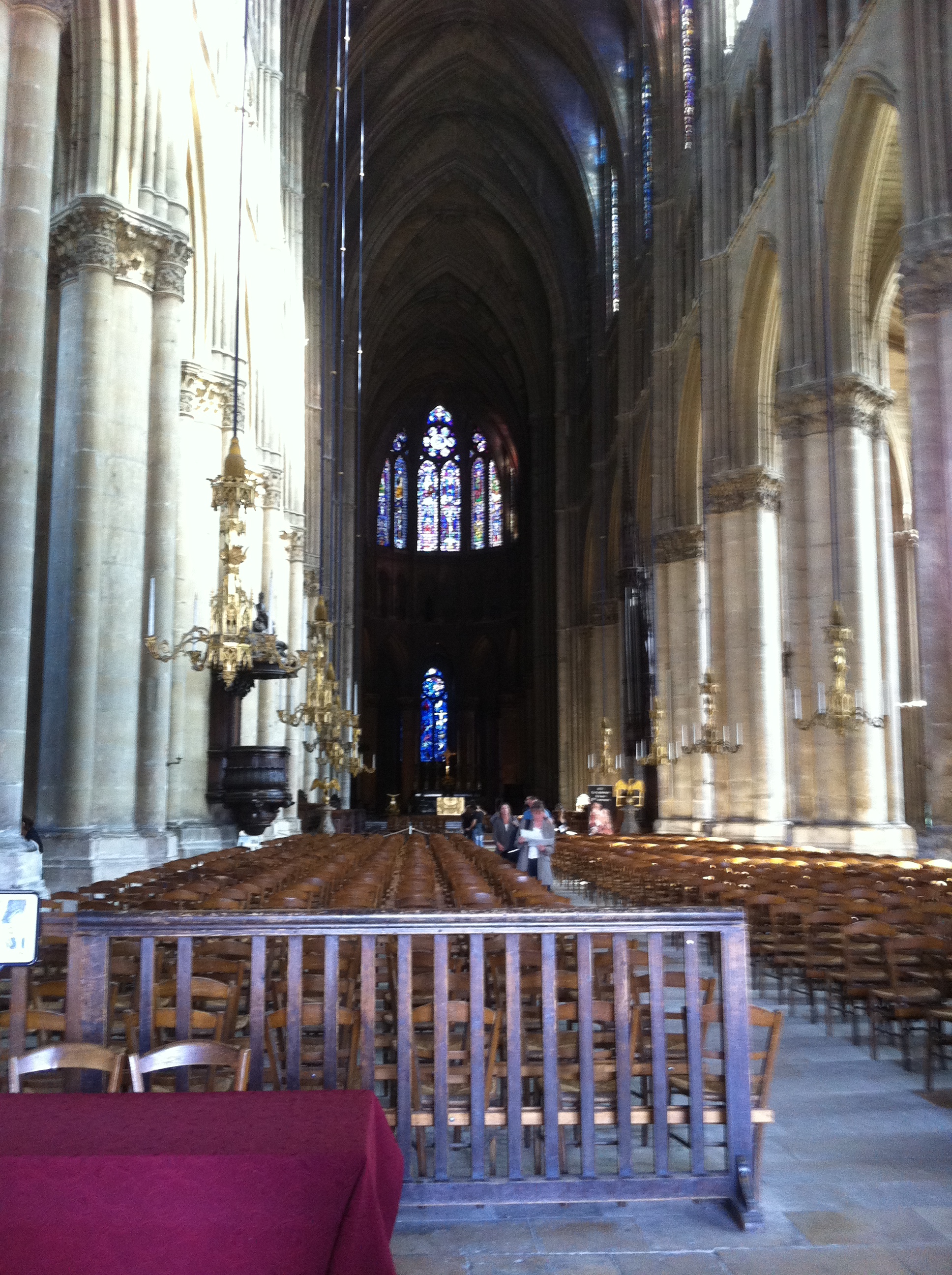
So, after being denied relief at McDonald’s (that sounds dramatic doesn’t it?  I wanted to throw that in just in case Tyler Perry wants to turn this into a movie.), we head to the Reims Cathedral.

It’s absolutely breathtaking!  This cathedral was built in 1211 and is a great example of Gothic architecture.  The details are similar to the cathedral I saw in Strasbourg last year.  It’s known as one of Europe’s greatest churches.  The first king of the Franks, Clovis, was baptized in this church in 496 AD.  This really helped to establish Christianity in France.  Since C-money’s baptism, Reims became the place for the coronation of French kings & queens (as mentioned above, there were 26 in total).  For this reason, it played a more important role than Paris’ Notre Dame cathedral.  Joan of Arc led Charles VII here to be crowned in 1429.  The French rallied around young Charlie 7 (or, probably as he was known to his friends…Sev’s) to push the English out of France and end the Hundred Years’ War (which was a series of wars waged from 1337 to 1453 by the House of Valois and the House of Plantagenet, also known as the House of Anjou, for the French throne, which had become vacant upon the extinction of the senior Capetian line of French kings.).  As you may remember from my London post, the House of Plantagenet loved to fight.  They were involved in the War of the Roses (fighting cousins) and this is the same house in which crazy King Henry 8 or as I like to call him, Crazy 8s) descended (the one killing all his wives).

I cover the origins of the French Revolution in my Versailles post but during the actual revolution, the French decided to convert all the cathedrals and places of worship into “temples of reason”.  They didn’t want religion to be forced on them.  After the monarchy was restored, Charles X was crowned King in 1825…this was the last coronation in France.  I guess old Double Nickels couldn’t keep it going.  The cathedral was almost destroyed by bombs during WWI and was completely rebuilt by John D. Rockefeller.  Who, interestingly, also rebuilt historical places in Athens and of course, Colonial Williamsburg.

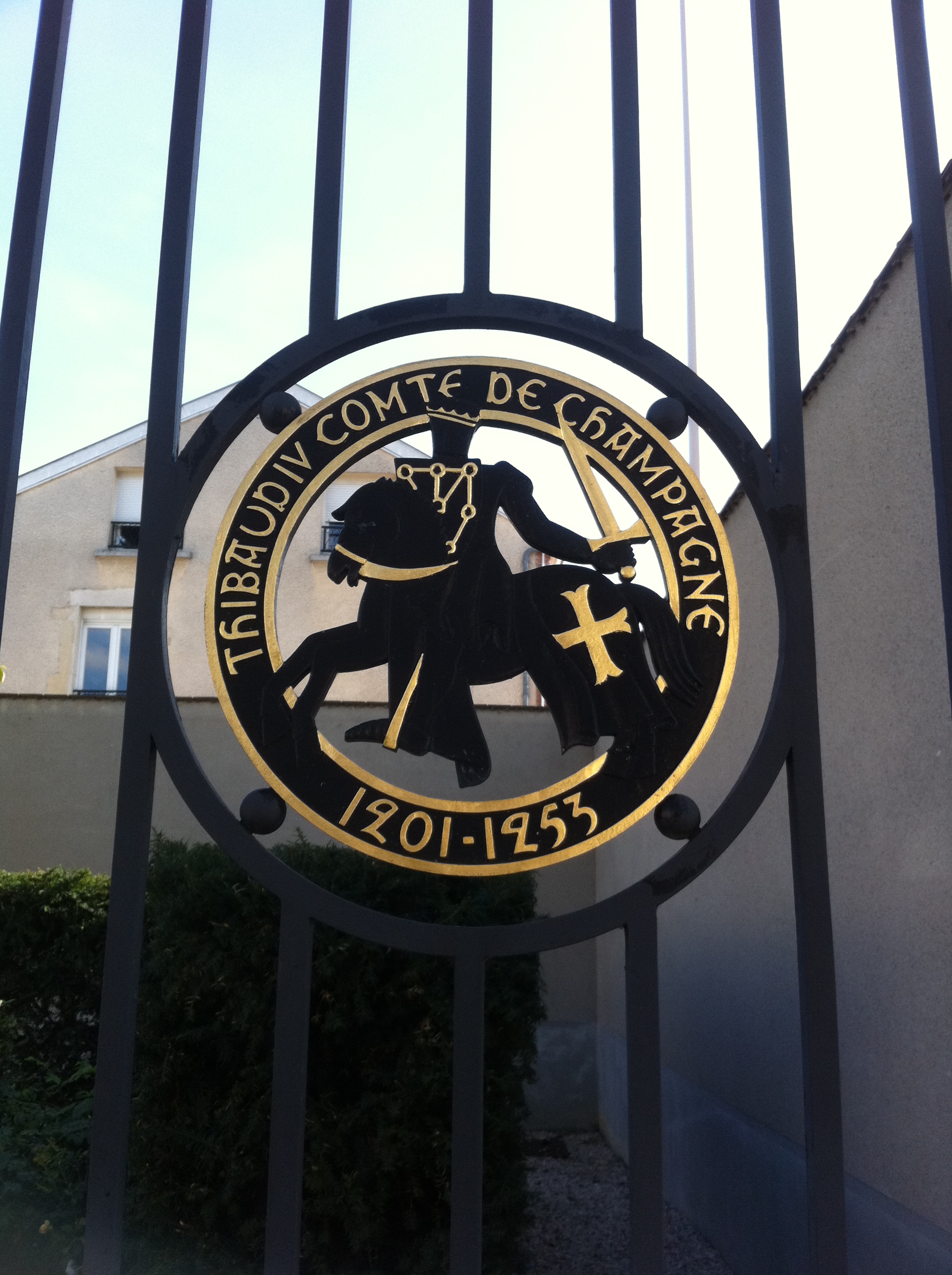
Taittinger
After getting our church on, we power walk to Taittinger (pronounced “tay-tan-zhay”) because we are thirsty and that sweet nectar is calling.  Taittinger is one of the biggest & most renowned of Reims’ caves.  We took a tour of the cellars (which are freezing).  Now, when we arrive, we ask to sign up for an English tour and the French receptionist was like, “weez ‘r full at de momeent. You’ll have to take ze Fraaanch tour unless you wait 2 more ooww-weres.”  So, I told him we’d take 3 tickets for the French tour, then we just filed in with the rest of the folks when the English tour started.  Where there is a will, there is a way. 

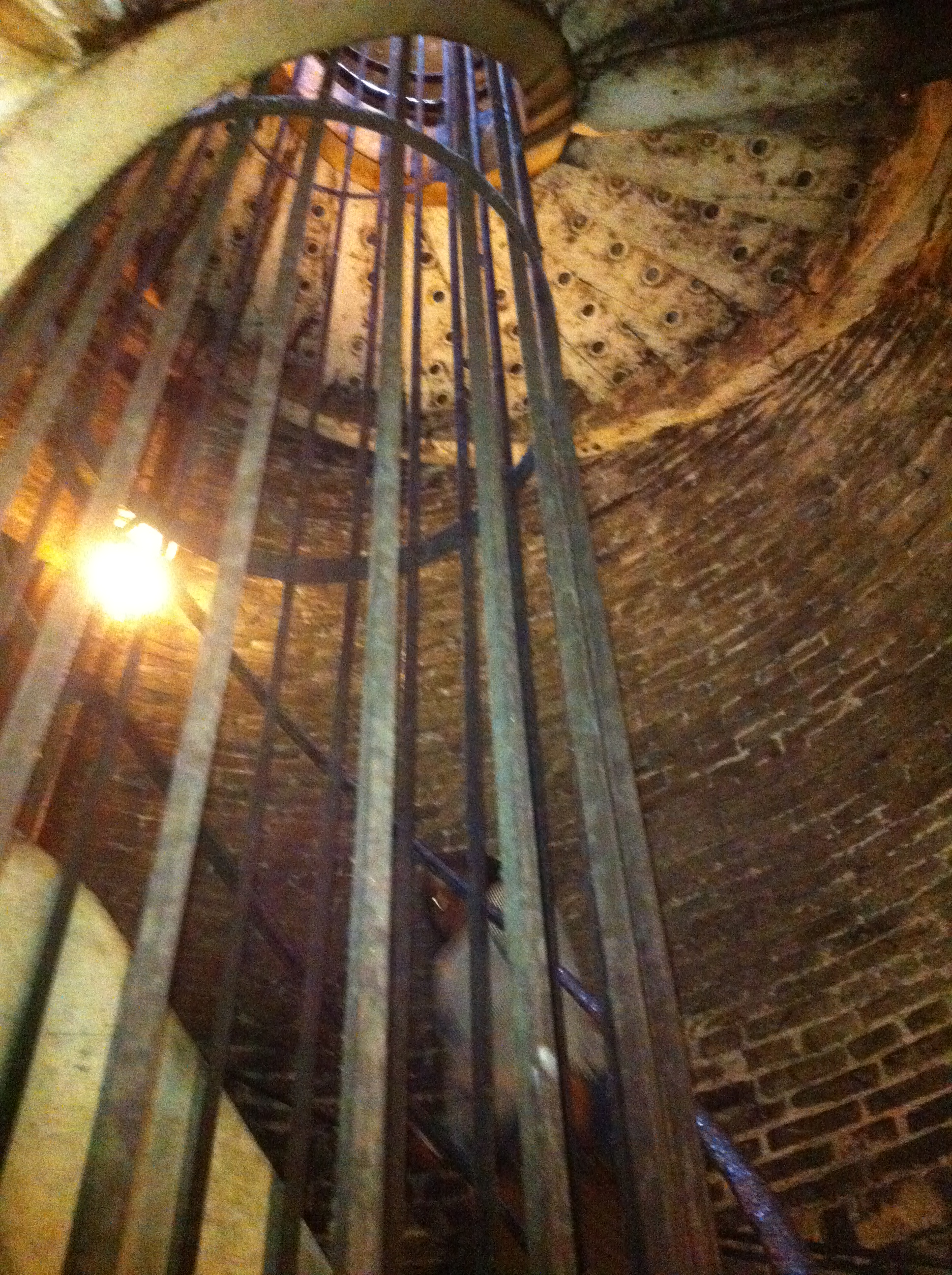
The tour starts with a 10 minute promo video about the beauty of Taittinger, then we followed our guide down 80 steps to the underworld city of champagne!  The deepest of the caves were dug by ancient Romans.  They were everywhere y’all.  There are approximately 3 miles of caves and 9 million bottles of champagne located here.  During the tour, our guide explained the process of making champagne.

The history of Champagne dates to about 1700 AD and a monk cellarmaster at the Abbey of Hautvillers near the city of Reims. As the story goes, a monk named Dom Pérignon was making wine for his colleagues when, unbeknownst to him, he failed to complete the fermentation before bottling and corking the wine. During the cold winter months the fermentation remained dormant, but when spring arrived the contents of the sealed bottles began to warm and fermentation resumed producing carbon dioxide that was trapped in the bottle. Later that spring Dom noticed that bottles of wine in the cellar were exploding, so he opened one that was intact and drank, declaring “Come quickly! I’m drinking stars!” Thus, Champagne was born and named after the region where it was discovered.  Today Möet & Chandon make a Champagne named in honor of Dom Pérignon, the serendipitous inventor of Champagne. A bronze statue of the famous monk stands outside Möet & Chandon in Epernay, France.

Today, the production of Champagne is quite different from Dom Pérignon’s accidental discovery.

The key reaction of winemaking is alcoholic fermentation, the conversion of sugar into alcohol and carbon dioxide by yeast. The maximum amount of alcohol attained through alcoholic fermentation is about 15% because the yeast cells are killed by high alcohol concentration.  Most still wines (i.e., table wines) contain 12 to 14% alcohol.

The key process in producing Champagne is a SECOND fermentation that occurs in a sealed bottle. The entire process is described below.
                    
SELECTING THE CUVÉE (La Cuvée)
The cuvée is the base wine selected to make the Champagne. The most expensive Champagnes are made from cuvées from selected vineyards in the Champagne region. Cuvées can be from a pure grape variety, such as Chardonnay or Pinot Noir, or can be a mixture of several grape varieties. Chardonnay is a white grape variety with white juice, Pinot Noir a red grape variety with WHITE juice. Pinot Meunier, a relative of Pinot Noir, also is used extensively. The slight rust color imparted to some Champagne results from using Pinot Noir cuvées that acquire some red color from contact with the skins. The longer the juice remains in contact with the skins, the darker red it becomes. If a Champagne is made exclusively from Chardonnay, it is called “blanc de blanc,” white wine from white grapes. Most Champagne is made from mixed cuvees. The alcohol content of the cuvee is usually around 10%.                                            


THE TIRAGE
After the cuvée is selected, sugar, yeast, and yeast nutrients are added and the entire concoction, called the tirage, is put in a thick-walled glass bottle and sealed with a bottle cap.  Then, the bottle is placed in a cool cellar (55-60°F), and allowed to slowly ferment, producing alcohol and carbon dioxide. Since the bottle is sealed, the carbon dioxide cannot escape, and,thereby producing the sparkle of champagne.

AGING ON DEAD YEAST
As the fermentation proceeds, yeast cells die and after several months, the fermentation is complete. However, the Champagne continues to age in the cool cellar for several more years resulting in a toasty, yeasty characteristic.  The best and most expensive Champagne is aged for five or more years.

RIDDLING (Le Remuage)

After the aging process is complete, the dead yeast cells are removed through a process known as riddling. The champagne bottle is placed upside down in a holder at a 75° angle. Each day the riddler comes through the cellar and turns the bottle 1/8th of a turn while keeping it upside down. This procedure forces the dead yeast cells into the neck of the bottle where they are subsequently removed. A riddler typically handles 20,000 to 30,000 bottles per day.


DISGORGING
The Champagne bottle is kept upside down while the neck is frozen in an ice-salt bath. This procedure results in the formation of a plug of frozen wine containing the dead yeast cells. The bottle cap is then removed and the pressure of the carbon dioxide gas in the bottle forces the plug of frozen wine out leaving behind clear champagne. At this point the DOSAGE, a mixture of white wine, brandy, and sugar, is added to adjust the sweetness level of the wine and to top up the bottle.  The bottle is then corked and the cork wired down to secure the high internal pressure of the carbon dioxide.  The sweetness levels of champagne range very dry (ultra brut) to very sweet (doux), with brut being the most common.  Personally, I love demi-sec.
    
Many Champagne houses produce “luxury cuvées,” their best and most expensive wines. Dom Pérignon is the luxury cuvée of Möet & Chandon; Cristal is pride of Roederer. Bollinger produces R.D. or “recently disgorged” wines. For example, you can purchase a 1982 Bollinger R.D. that was disgorged in April 1991, nine years after being placed in the bottle. (source “Making Champagne” by Alexander J. Pandell, Ph.D.).

We had a group of senior citizens on our tour…if you read my Las Vegas post, you know how they keep it real.  At the very start of the tour, Archie starts in.

Archie:  Excuse me.  That was an excellent overview of the champagne making process.  Really, it was very, very good.  You have great oratory skills.  I just have a question…are you a member of the Taittinger family?
Francy the Guide:  Um, thank you.  No, I am not a member of ze Taittinger famileee.  I work for the family giving tours of the cellars and explaining how champagne is made.
Archie:  You aren’t a member of the family?  Well, do you want to do this forever?  What’s your 5 year plan look like?  You can do better than giving tours.
Me: Seriously?  Again?  Why, God?

You know the Oldies but Goodies Group had to worry that guide with 1000 questions and block everything.  We just gave up trying to participate and meekly just followed them at a distance.  I couldn’t do it.  In fact, I was just looking for the exit so I could start the champagne tasting.

It was magnificent to see millions of bottles fermenting.  I want a cellar in my next home.  The House of Nichole.  That’s going on my Vision Board right now.

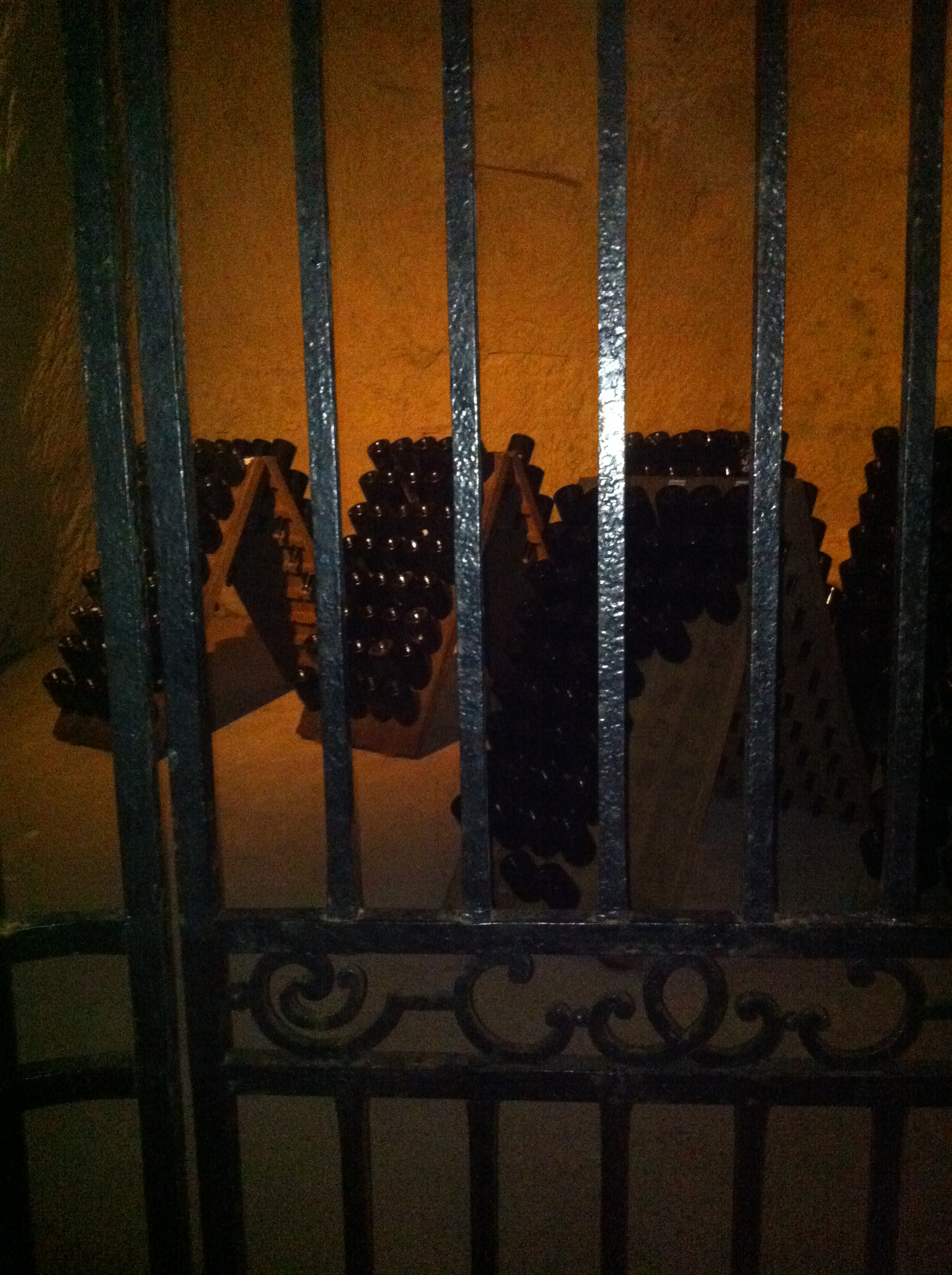
The expensive bottles were behind locked gates.

We then get to my favorite part of the tour…drinking!  I love Taittinger.  It really is very smooth.  I’m partial to sweeter champagnes (demi-sec) than dry (brut).  But, I will drink it all 🙂

Martel

We then head over to the next champagne house…Martel.  This offers a homey contrast to Taittinger’s more “business” ambiance.  At this point, I was done with touring cellars figuring that once you’ve seen 1, you pretty much know what to expect.  I just wanted to go drinking.  Unfortunately, Martel didn’t offer tastings without the tours.  Renee and I did end up buying a couple of bottles of champagne since I love Martel too.
  
 
After we leave Martel, we head another champagne house which allowed tastings without a tour (yay!) and met some people from the U.S. who happened to be at every house we were visiting.  The husband & wife now live in Brussels due to a job transfer with FedEx and their friend was over for vacation.  I believe he bought an entire case of champagne (so of course, I realized immediately that he was cool).  At this point, Renee & I are feeling no pain.  Look how happy we are!

Champagne is the new black.  Live it, love it.  Can’t stop, won’t stop.

Epernay
 

After leaving our last champagne house in Reims, we catch a train to Epernay because I have always wanted to visit Moet & Chandon!  However, we arrive just as they are closing so no tastings. 
 

I do get a pick with Mr. Perignon though!
 

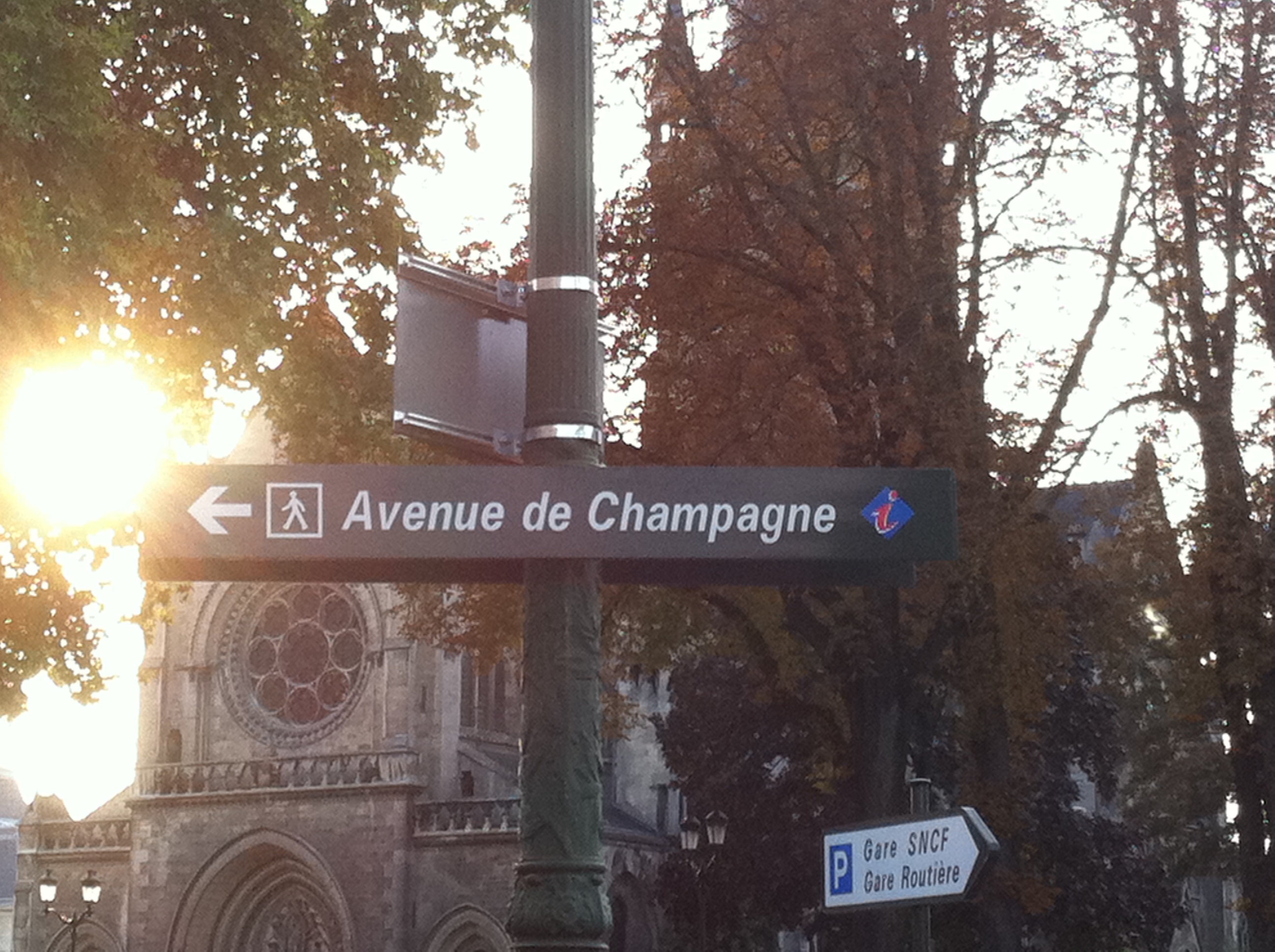
We walk up Avenue de Champagne

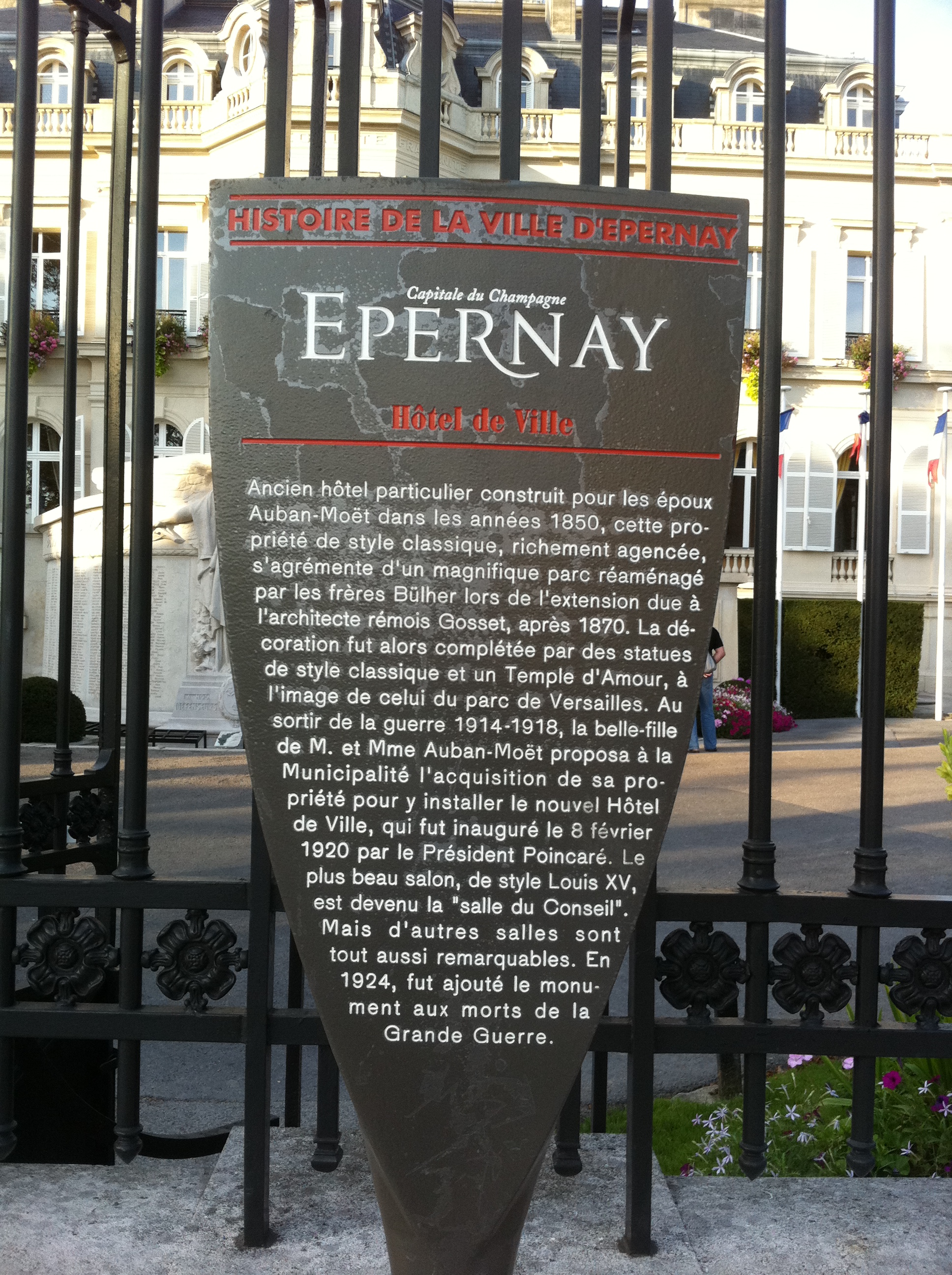
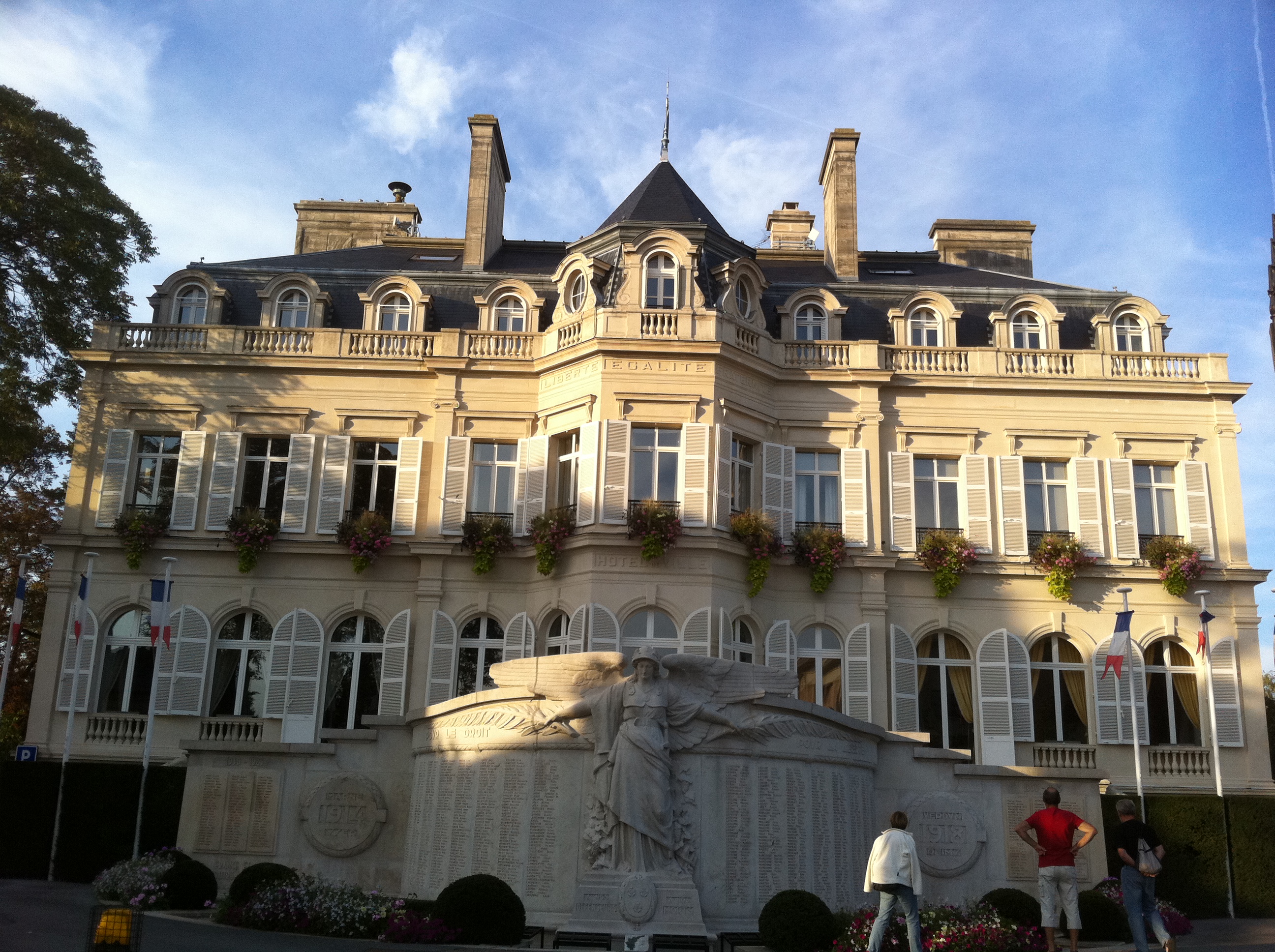
Past Hotel Ville (City Hall)

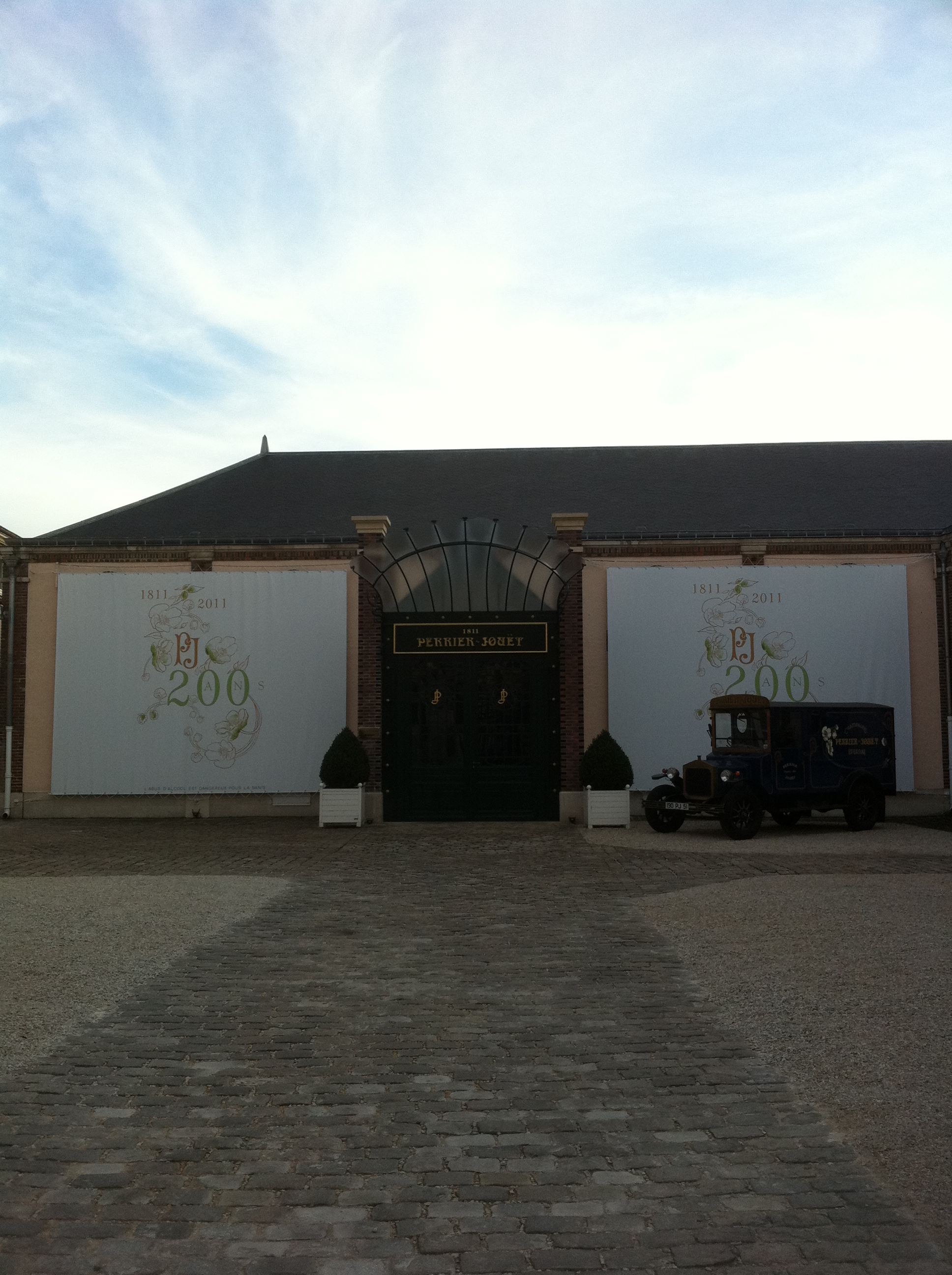
And see a couple more champagne houses.
 

Renee was able to buy a couple more bottles of champagne and then we had dinner before heading to the train station to catch the last train back to Paris.

While we were waiting for our train back to Paris, we met a girl named Toni.  She’s 25 and her story is so fascinating.  Toni sold her stuff and moved overseas with her passport and a backpack.  She ended up getting a job on a yacht as part of the crew and has 3 months off each year where she just travels around Europe and does some sort of work exchange…so, she basically works for a room to sleep in.  I was like, “um, how can I do that?”  Some of the jobs she has is bartending, waitressing, working in a kitchen, etc.  You work out the particulars before you actually arrive in the city.  Now that is cool!

Tip #4: Using Mobile Phones Overseas

Most of us are tied to our mobile phones in our daily lives. So, when we travel overseas, we don’t want to be cut off from the world. However, taking your U.S. mobile phone overseas isn’t as easy (or cheap) as it sounds.

But, here are a few tips to make it easier:

1. Mobile Phones 101* = The standard mobile phone network in Europe (and most of the world) is called GSM. Within this network, different regions run on different bands. The U.S. uses 2 bands and most of Europe uses 2 different bands. A GSM U.S. phone that’s tri-band or quad-band operates on both US bands, plus one or both European bands (so it works in the U.S. and abroad). *source Rick Steves “Europe Through the Back Door”

2. If you have a tri-band or quad-band phone, you can contact your provider and ask about international data/voice plans. Most providers offer a temporary international solution. Also, check to see if you have corporate discounts. My international plan (unlimited data but roaming charges for phone calls) is less than $60/month with AT&T.

3. Global Cell Phone Rental for Verizon Customers: If you would like to take a cell phone abroad and you are a Verizon Customer, Verizon offers a rental service for global phones for travelers who will be out of the country for 21 days or less (Global Travel Program). Service costs vary.  The global value plan is put into effect when the phone is activated, and the plan is pro-rated, so the user is only charged from the day the phone is activated until the day the phone is deactivated; thus, the user may end up paying less than the $4.99 for the month of the global value plan.  It typically takes two business days to receive the phone via FedEx (signature required) delivery and users can activate the phone by calling Verizon or by going to a local Verizon store. Additionally, the Verizon customer can keep his or her current phone number.  To arrange for a phone rental, Verizon customers should call Verizon Customer Service and ask to speak to the Global Services department about Global phone rental.  If you aren’t sure whether to rent a phone or add service to your smart phone, Verizon has a pretty comprehensive page on their Global Services with a Trip Planner to help you decide on the type of service you will need based upon travel type (cruise vs. land) and country. 

4. Another great option is Cello Mobile. If your cell phone provider doesn’t offer an international plan (or the rates are too steep), this is a cheaper alternative and it has received rave reviews from users. I have identified a promo code for 10% off rental of the phone but it’s only valid if you travel for 15 or more days (promo code 1520). I’m not sure how long it’s valid for.  Quick Tip: I usually do a Google search with the “name of the company + promo code” to see if I can find any valid coupons. I have success about 80% of the time.5. If you are an iPhone user and just want to use the phone overseas for WiFi only, then you will need to disable roaming. To disable roaming on an iPhone — go into settings and select “Airport Mode”, and a small icon of an airplane will appear in the upper left corner of the screen. Consider that the iPhone also has WiFi capability, so in theory you can tap into any free WiFi source with the iPhone and surf the web. If you choose to do this, I would recommend staying at a vacation rental or hotel that offers free WiFi.

6. International Rate info by Service Provider
a. AT&T
     i. How to keep data charges predictable when traveling abroad 
     ii. World Packages   
 
b. T-Mobile
     i. International Roaming
 
7.  Rail Europe offers an “eKit” (pre-paid phone card and international phones) for purchase. They run various promotions throughout the year offering credit based upon the type of service your purchase.
 
Need travel apps for your phone?  Check out my post here for recommendations.  Any updates or feedback on using mobile phones overseas?  Please comment so I can keep the information current and correct.  Thanks!

Travel Tip #1: Deciding on a Destination

Some of us know exactly where we want to travel to while others just know they want to go someplace. So, how do you decide on a destination?

1. Figure out the type of vacation/trip you want to have (i.e. adventure, relaxation, beach, ski, etc.).

2. What’s your budget? This will help you to determine the length & locale. Some people think that international travel is too expensive to consider. But, smart travellers can save a lot of money by travelling during the right months (shoulder or off-peak season) & with proper planning (staying in a vacation rental instead of a hotel, buying tickets in advance, taking trains, buses & shuttles, etc). Travel Tip #2 will focus on how to travel overseas on a budget.

3. What time of year? Keep in mind that southern countries & islands have opposite seasons than the US (i.e. South America & South Africa have their summer season during our winter season). So, if you are looking for a tropical vacation during the holidays, check out the Caribbean, Mexico, South America & Africa. If you want to save money and travel off-peak to Europe (including the UK and Asia), it will be cold there (maybe even more so) than it is here and there are less hours of sunlight but you can still have the trip of a lifetime.

4. Travel as part of a tour group or on your own? 
    a. The advantages of a tour group (especially in foreign speaking countries) is that you have a set schedule with an English-speaking guide and are pretty much guaranteed to see the big tourist attractions. I strongly recommend going with a tour group (i.e. Ambassadair) for Asian countries (the language barrier is a killer) or if you want to experience the “typical” tourist adventure in any country without the pressure of planning it yourself. These “pre-packaged” tours are pretty easy to do. Just sign up and go.

    b. If you are comfortable with planning your own logistics & want to have a bit more flexibility to your trip, doing it on your own can be cheaper & more exciting. I would only recommend doing this on shoulder & off-peak seasons for major trips (i.e. visiting Italy for the first time). Peak season brings loads of tourists and you’ll end up spending a lot of your time standing in line.

5. Buy a guidebook. I never travel without one. Rick Steves is my best friend when I go to Europe. Most of his books are updated annually (however, I only replace mine every 3 years as you can go online to www.ricksteves.com and get the updates). This is great because you have the most up to date information before you travel.  Just know that Rick only covers Europe, the UK and Istanbul. For other locales, try Lonely Planet, Eyewitness Travel & Frommers. Before planning a European trip, I suggest you pick up Rick Steves “Europe Through the Back Door” as it has a lot of great travel tips (buy it on amazon.com to save $).

6. Verify that you have a valid passport. U.S. passports are valid for 10 years. I believe they cost approximately $165 (passport book & card) or $135 (passport book only) for a first time adult applicant (16+).  Renewal is approximately $140 (adult passport & card) or $110 (adult passport only). Minors are charged $115 for first time applicant.  However, check the website for the most current fee schedule.  Passports must be valid for up to 6 months after your ticketed date of return.

7. Visas. Be sure to verify if the country you plan to visit requires a visa as well as a passport.  If so, you will need to fill out the proper paperwork. I generally get my visas thru CIBT (which also processes passports as well). 

8. Vaccinations. Visit the CDC website to see what (if any) vaccinations are required. You should definitely make sure your tetanus shot is up to date and consider getting the Hep A vaccination. A lot of cities have “travel clinics” where you can make an appointment with a nurse, tell them the countries you plan to visit and they will suggest the recommended (or required) vaccinations.

9. Travel Insurance. This is a bit like gambling — you just don’t know if you will need it. I recommend it because you never know what can happen and it can give you some peace of mind. I was lucky to have travel insurance when my luggage got lost on a trip to Italy. This allowed me to be reimbursed for the clothes I had to buy while I waited for my luggage to arrive.

10. Be safe. It never hurts to check on the state of affairs in the country you plan to visit. I generally look at the travel alerts on the U.S. State Department website and ASIS International (which will give you the demographics, crime rates & incidents, political climate, & emergency contact numbers). Also, I research any local scams on Rick Steves Graffiti Wall. This has proved to be invaluable.

Tip #3: Handling Money Overseas

What is the best way to get foreign currency without paying exorbitant conversion or international transaction fees?
1. Check with your credit card company, bank or credit union to find out a) what (if any) transaction fees are levied on international purchases & withdraws; b) the exchange rate for a particular foreign currency (i.e. GBP aka British Pounds); & c) if they have (or are affiliated with) any banks in the country you are going to visit. I have found that American Express (at least my Rewards card) does not charge a transaction fee. However, it’s hit or miss if Amex is accepted overseas. Most merchants prefer Visa and MasterCard.

2. Check the exchange rate via an independent online tool (i.e. XE Universal Currency Converter). This can give you an idea if your bank or credit union is giving you a good rate. Right now, with the economic turmoil in Greece (and Italy as well as a few other European countries), the Euro is losing some of its value which is making it weaker against the U.S. dollar. That means more euros for your buck.

3. Debit Cards/Check Cards = I always withdraw cash from the ATM once I get to my foreign destination. The exchange rate is usually pretty good. Be sure to research banks in the country you are visiting to check out their exchange rates beforehand. While exchange rates change daily, usually you can spot trends to identify banks that offer the best rates on a consistent basis. Quick tip — ATMs at the major train stations in the UK do not charge fees for non-bank users so this is a great place to withdraw cash.  Be sure to call and let your bank know you will be using your card overseas. 

4. Credit Cards = A few years ago Europe (including the UK) introduced a “Chip + Pin” card. These are credit cards that are embedded with a “smart chip” and require a 4 digit pin to authorize transactions. Think of it as a debit card.
    a. Using U.S. credit cards abroad: It used to be that you could use your U.S. credit card for foreign purchases with no problem. But this past year, I have found that the acceptance of cards without a “smart chip” is becoming less common. However, most hotels & major restaurants and store chains still accept U.S. credit cards. I usually ask the merchant before purchasing a product or service if they accept cards without a chip. Be sure to verify methods of payment with small B&Bs as I’ve found they prefer cash.
    b. Dollars vs. Foreign Currency: If you pay for an item with an American credit card, be sure to verify that the merchant charges you in the local currency. DO NOT allow them to charge you in U.S. dollars. Hotels will usually ask if you would prefer to be charged in U.S. currency. ALWAYS DECLINE. The exchange rate is terrible & you will end up paying up to 6% more than if you kept the charge in the local currency. Your card company will convert the charge on your statement. Which leads me to…

5. Travelex Cash Passport = I found out about this while at JFK airport on my way to Prague in April. It’s a “pay as you go” Chip + Pin card. You can load up the card either online or at the Travelex kiosk at the airport. It’s safe & easy to use. This allows you to pay for items via a credit card without transaction fees. When the card runs out of money, simply go online and add more funds. You can either buy the card online (for a $9.99 fee) or at a Travelex location (which are in most airports but you can verify on their website).  If you purchase the cash passport online, you can have it shipped or pick it up at a Travelex location.  I prefer to buy my card at the airport which allows me to avoid the $9.99 fee.  The exchange rate is very competitive.

Travel Tip #2: Champagne Vacations on a Boones Farm Budget

Have you been dreaming about a destination that seems out of reach financially? Where there is a will, there is a way. With smart research & proper planning, you can save a ton of money on your dream vacation. Here are few things to consider:

1. Plan ahead. Know your destination, approximate dates of travel (even if it’s just a preferred month) and your budget. This will allow you to take advantage of a great deal when the opportunity is presented.

2. Airline tickets — When should you buy airline tickets?
    a. For domestic & off-peak international travel, I recommend booking 3 months to 14 days prior. If you are flying international during peak season, you should be prepared to buy your ticket 4-9 months before your trip. I’ve noticed a trend of discounted airfares offered late summer for fall & winter travel to Europe.

    b. DO’s & DONT’s

        i. DO be flexible. You can save a couple of hundred dollars by being able to move your departure or return date by 1 or 2 days.
       ii. DON’T buy a ticket on the weekends. Ticket prices are highest during this time. 
       iii. DO buy your ticket on a Tuesday around 3pm. Pricing trends have shown that many sales are launched on Monday nights which offer discounts of 15%-25%. Competitors tend to match these offers on Tuesday morning. By 3pm, fares are as cheap as they are going to get for the week. Deals usually expire by Thursday or Friday so snap up a good deal no later than Thursday.
      iv. DON’T fly on a Monday, Friday or Sunday as these are the most expensive tickets.
       v. DO fly on Tuesday, Wednesday or Saturday to get the cheapest flight.

    c. Get the social media edge by “liking” (on Facebook) or following (on Twitter) airlines. They have started to tweet & post hour-long airfare sales which can be to your advantage.

    d. Available resources: Check out Bing Travel
        i. This site aggregates information from online travel sites (Priceline, Expedia, Travelocity, Hotwire and BookingBuddy).
       ii. It also has Price Predictor — a tool that is based on historical pricing trends. Has a green, yellow, red stoplight theme which will recommend to either buy now or wait.
      iii. It posts last minute deals. You can get a good deal with last minute deals but it’s a huge gamble. This is really for those who decide today they want to go someplace this weekend.

3. Hotel or Vacation Rental? You can generally save a ton of money by renting an apartment, flat, house of villa. Vacation Rentals typically require you book for a minimum number of nights. You can purchase food & make your own breakfast & lunch (which will save you a ton). Most usually have washers & dryers so you can do a load of laundry which will keep your luggage lighter (and guarantees no over-the-limit baggage fees). I’ve booked a flat in London for 5 people for New Years Eve and we are paying only $250 per person for 5 nights. I will cover the ins and outs of vacation rentals in Tip #5.

4. Buy train tickets in advance. You can take advantage of great deals which can save you up to 50%.

5. Dining. Eat at local Mom & Pop restaurants in non-touristy parts of the city. The food is phenomenal and 1/3 of the price you will pay for average fare next to a famous monument.

6. Tours. Check out last-minute tours on Viator. This site is great and they usually have tours that are 20% off the day before or of.

7. Consider a cruise. It’s an all-inclusive which makes it cheaper than doing a land-only vacation. Plus, it allows you to hit several locations in a short amount of time.

Bottom line…organization & planning will save you a good amount of money. Money that you can spend on your next vacation!